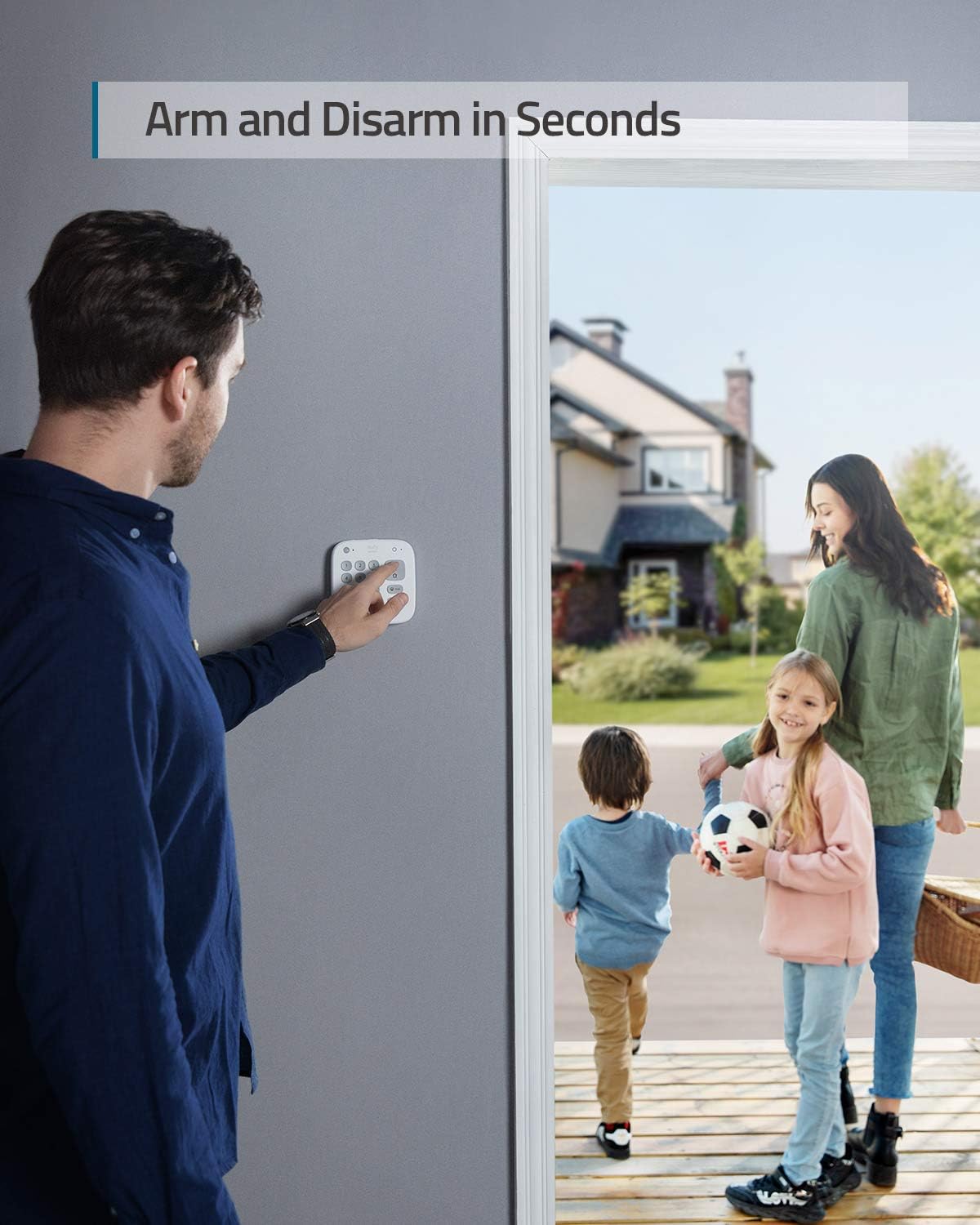
If you’ve been steering clients or your own household toward SimpliSafe or Ring and someone asks “what about eufy, Arlo, or Wyze?” — you already know the honest answer is complicated. These three brands sell wireless home alarm kits (pre-packaged bundles of sensors, a central hub, and optional professional monitoring) that sit in an awkward but genuinely interesting middle ground: priced above the bare-bones DIY tier but well below the Qolsys IQ Panel 4 and DSC PowerSeries Neo world. A wireless alarm kit, for anyone newer to this, means everything communicates over radio frequency (usually Zigbee, Z-Wave, or a proprietary 2.4 GHz protocol) rather than hardwired runs to a panel — so installation is faster and renter-friendly, but you trade some reliability and expandability in return. This guide breaks down where each brand wins, where each one stumbles, and which type of buyer should take a serious look.
We’re treating this as a decision-frame article, not a deep spec teardown. If you have a deal under LOI where the client is asking about these brands as alternates to Ring Alarm Pro or Abode, this gives you the tradeoff map you need to close the conversation.
How These Three Brands Actually Position Themselves
Understanding where eufy, Arlo, and Wyze think they sit in the market makes the comparison cleaner.
Wyze built its brand on aggressively low hardware prices and an optional monitoring plan (Wyze Home Monitoring, now priced at roughly $9.99/month as of early 2026) that undercuts nearly every competitor in the space. Security Baron’s review of Wyze Home Monitoring notes that the platform’s core appeal is the combination of low entry hardware cost and a monitoring subscription that costs less per year than many competitors charge per month. The tradeoff is a relatively shallow sensor ecosystem and a hub that, across aggregated reviews, shows mixed marks on cellular backup reliability — a meaningful concern if you care about alarm communication surviving a broadband outage.
eufy (a subsidiary of Anker) leads with camera-first security and bundles alarm sensors into what is fundamentally a camera ecosystem. PCMag’s eufy Security Alarm Kit review describes the system as well-suited for buyers who want integrated camera-plus-sensor coverage under one app but notes that the alarm panel functionality feels secondary to the video experience. There’s no professional monitoring option through eufy’s own platform as of mid-2026 — the system is self-monitored only, which is a hard stop for certain use cases.
Arlo occupies the clearest premium position of the three. The Arlo Security System (built around the Arlo SmartHub and compatible sensors) targets the upper edge of this mid-market tier, with hardware prices that approach Ring Alarm Pro territory. CNET’s Arlo Security System review consistently highlights the video quality of Arlo’s cameras as class-leading in this segment, but reviewers also flag that the alarm sensor line-up is limited compared to dedicated alarm platforms and that Arlo’s monitoring plans have seen pricing adjustments upward since their 2023 relaunch.
By the numbers — starter kit pricing (May 2026 market reference):
| Brand | Entry Kit (MSRP) | Monitoring ($/mo) | Professional Monitoring? |
|---|---|---|---|
| Wyze Home Monitoring Starter | ~$100–$130 | ~$9.99 | Yes (3rd-party) |
| eufy Security Alarm Kit (5-piece) | ~$80–$120 | $0 (self-only) | No |
| Arlo Security System (5-piece) | ~$250–$350 | ~$12.99–$17.99 | Yes |
Pricing reflects aggregated retail averages from PCMag and SafeWise sourcing; verify current rates before quoting a client.
The Tradeoffs That Actually Matter for a Mid-Market Decision
Cellular Backup: The First Question to Ask
For anyone building a system that needs to survive a cut cable or router reboot, cellular backup (a built-in SIM card that routes alarm signals over a carrier network when broadband fails) is non-negotiable. This is where the three brands diverge meaningfully.
Wyze’s hub does include cellular backup as part of the paid monitoring plan — but Security Baron’s review and aggregated owner reports flag that the cellular fallback can take longer to activate than Ring or SimpliSafe, and the LTE module’s carrier relationship isn’t publicly disclosed by Wyze, which matters as we watch ongoing carrier network consolidation through 2026.
Arlo’s SmartHub, per CNET’s review, does not include built-in cellular backup in its base configuration. Arlo positions the system for broadband-connected homes, which is reasonable for a camera-first platform but is a genuine liability for alarm-centric deployments. If a client’s threat model includes someone cutting internet before entry, Arlo is the wrong answer.
eufy’s self-monitored system has no cellular communication path at all — the hub is Wi-Fi dependent. For pure self-monitoring where the homeowner is the only responder, this may be acceptable. For any professional monitoring integration, it’s a dealbreaker.
Decision rule on cellular: If cellular backup is required → Wyze is the only viable option in this group, and even then, verify the monitoring partner’s cellular response SLA before committing. If cellular is nice-to-have → Wyze still wins. If the system is camera-overlay-only with alarm as an afterthought → eufy can work.
Sensor Ecosystem Depth and Expandability
This is where dedicated alarm platforms — even Ring Alarm — beat all three brands cleanly.
Wyze’s sensor lineup covers the basics: entry sensors, motion sensors, and a keypad. Across aggregated reviews on PCMag and SafeWise, owners consistently report the sensor pairing process as simple and reliable, but note that there’s no smoke/CO integration within the alarm ecosystem (you’d rely on separate Wyze smoke detectors that don’t tie into the monitoring relay). For a multi-zone build, Wyze’s ecosystem caps out faster than most practitioners need.
Arlo’s sensor line is similarly limited and clearly designed as an overlay to its camera network rather than a standalone alarm infrastructure. The Wirecutter’s 2025 home security roundup notes that Arlo’s sensor variety hasn’t expanded meaningfully since the system’s relaunch, which is a signal about platform investment priorities.
eufy’s sensor ecosystem is the shallowest of the three for alarm purposes, leaning entirely on cameras and basic entry/motion sensors. If a client needs glass-break detection, flood sensors, or CO integration, eufy cannot close that gap natively.
Decision rule on expandability: More than 8–10 zones or any environmental sensor requirement → step up to Ring Alarm Pro, Abode Iota, or a dedicated panel platform. Under 6 zones, entry/motion only → Wyze or Arlo are viable.
App Experience and Third-Party Integration
All three brands live entirely in app-managed ecosystems, which matters for client handoff and long-term support.
Wyze’s app has a broader feature footprint than most people expect — its Home Monitoring integration is reasonably polished — but owners in long-run reviews consistently note the app’s complexity grows as you add non-security Wyze devices (bulbs, vacuums, etc.), creating a cluttered experience for clients who only want alarm functions.
Arlo’s app is purpose-built around video, and the alarm functions are clearly a secondary layer. For clients who are primarily camera buyers adding a basic alarm overlay, this is coherent. For clients who think of security monitoring first, it feels underdeveloped.
eufy’s app is the most camera-centric of the three, with alarm functions tucked under camera device management rather than foregrounded as a security dashboard. PCMag’s eufy review describes the UI as “functional but not alarm-native.”
Home Assistant integration note: Of the three, Wyze has the most active community integration for Home Assistant (via custom component), which matters for the whole-home integration segment. Arlo has official HACS support. eufy’s local API situation remains inconsistent as of mid-2026, with integration reliability lower than the other two.
Who Should Skip All Three (And What to Spec Instead)
This is the honest part of the comparison.
Skip eufy, Arlo, and Wyze if:
- The client needs professional monitoring with a verified cellular backup path and documented response SLA
- The install requires more than 8 sensor zones
- Environmental sensors (flood, CO, smoke relay) need to integrate into the monitoring stream
- The client is property-management scale (more than 2–3 units)
- Future panel expansion is likely within 24 months
In those cases, the step-up that makes sense depends on budget:
- $300–$700 range: Ring Alarm Pro (cellular built in, solid sensor ecosystem) or Abode Iota (professional monitoring, Z-Wave/Zigbee expandability, strong Home Assistant support)
- $800–$1,500+ range: Honeywell Resideo Vista-20P with a cellular communicator, or Qolsys IQ Panel 4 for clients who want a touchscreen-forward panel with broad sensor compatibility
Per Alarm Grid’s published platform comparison documentation, the Qolsys IQ Panel 4 supports over 1,000 compatible sensors across multiple RF frequencies — a meaningful contrast to the sub-20-sensor ecosystems of the brands reviewed here.
If X, Then Y — The Decision Frame
Here’s where we land after mapping the tradeoffs:
If the client is a renter or short-term homeowner who wants basic entry/motion coverage, camera integration, self-monitoring, and zero subscription cost → eufy is the cleanest, lowest-friction option. Expectations need to be set around the self-monitoring ceiling.
If the client wants professional monitoring, a credible (if modest) cellular backup, and the lowest possible monthly cost → Wyze Home Monitoring is the value pick in this group. Verify the monitoring partner’s cellular SLA, and set expectations about sensor ecosystem limits.
If the client is primarily a camera buyer who wants alarm capability as a secondary overlay and is comfortable with broadband-dependent operation → Arlo makes sense, especially if they’re already in the Arlo camera ecosystem. Don’t spec Arlo as a primary alarm platform.
If any of the skip criteria above apply → quote Ring Alarm Pro as the next step up. The price gap from Wyze/eufy to Ring Alarm Pro is smaller than most clients expect once you account for monitoring plan costs over 24 months, and the cellular reliability gap is material.
The broader pattern here: eufy, Arlo, and Wyze are real, well-supported consumer products that serve a specific buyer profile well. They’re not corners cut — they’re honest tradeoffs. The practitioner’s job is knowing exactly where those tradeoffs matter for the specific install, so the recommendation holds up two years after the client moves in.