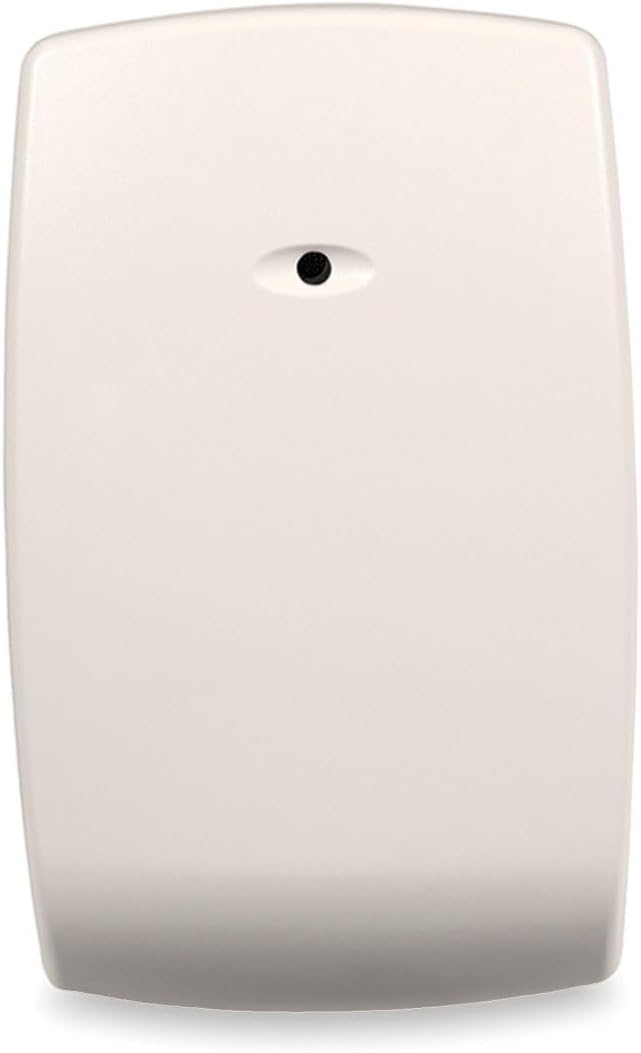
A glass break sensor is exactly what it sounds like: a detector that triggers your alarm the moment someone shatters a window. Most home alarm systems protect doors and windows with magnetic contact sensors — tiny magnets that notice when a door or window opens. That’s useful, but a determined intruder can smash a pane and step inside before a contact sensor ever fires. Glass break sensors close that gap by detecting the break event itself, before the person fully enters. There are two fundamentally different ways to detect that event — one listens for sound, one feels vibration — and they are not interchangeable. Pick the wrong type, or a sensor your panel doesn’t support, and you’ll either get nuisance alarms or no alarm at all. This guide walks through the tradeoffs across three tiers of use case, the compatibility landscape, and the decision rules you need to spec it correctly the first time.
Acoustic vs. Vibration: How Each Technology Actually Works
Understanding the detection mechanism is the foundation for every downstream decision — range, placement, and panel compatibility all follow from it.
Acoustic Glass Break Detectors
An acoustic glass break detector contains a microphone and onboard signal processing. It listens continuously for the two-stage sound signature of breaking glass: a low-frequency “thud” (the initial impact or flexing of the pane) followed closely by a high-frequency “shatter” (the tinkling of glass fragments). The requirement for both signals in sequence is intentional — it dramatically reduces false alarms from dropped plates or loud televisions. Detectors that listen only for the high-frequency shatter have notoriously elevated false-alarm rates; the dual-pattern approach is the current industry baseline for any sensor worth speccing.
Key published specs to know, per manufacturer data sheets and Alarm Grid’s Glass Break Detectors FAQ and Compatibility Guide:
- Coverage radius is typically rated at 10–25 feet in open, unobstructed space. Most mainstream sensors — including the Honeywell/Resideo FG-1625F, DSC PG9922, and Bosch DS151i — are rated at 15–20 feet under typical room conditions.
- Coverage is line-of-sight dependent. The sensor must have an unobstructed acoustic path to the glass. A wall, a heavy curtain, or a large piece of furniture between sensor and window can reduce effective range substantially, according to Alarm Grid’s installation guidance for acoustic glass break sensors.
- One acoustic sensor can cover multiple windows in the same room if all windows fall within the rated radius and the room geometry doesn’t create acoustic shadows.
Who this is for: Wide-coverage installs where wiring every window individually is impractical — open-plan living rooms, loft apartments, commercial storefronts. One sensor per room is often sufficient. Also the right call when you’re unsure exactly which windows face the highest risk.
Who should skip this: Rooms with heavy soft furnishings that dampen sound, oddly shaped rooms with alcoves, or situations where you need granular zone reporting identifying which specific window broke. Acoustic sensors report a zone, not a specific pane.
Vibration (Shock) Glass Break Detectors
A vibration or shock sensor physically mounts on the glass pane itself (or sometimes on the frame) and detects the mechanical shock wave that travels through the glass at the moment of breakage. Some units use a piezoelectric element; others combine shock detection with a flex or bend measurement. Because the sensor is in direct contact with the glass, range is not a variable — coverage is exactly one pane.
Published spec distinctions that matter:
- Sensitivity adjustment is almost always present. Too sensitive and you’ll false-alarm on window cleaning, nearby construction, or heavy truck traffic. Too low and you miss a slow, deliberate score-and-break entry method.
- False-alarm rate is higher in high-vibration environments — near rail lines or heavy road traffic — compared to acoustic sensors in those same environments, a distinction noted in SDM Magazine’s Sensor Technology Roundup 2025.
- They require physical access to mount on every pane you want to protect, which means labor cost scales linearly with window count.
Who this is for: High-value single panes (skylights, basement windows, large picture windows an acoustic sensor can’t reliably cover from across a room), or older homes where room geometry makes acoustic placement difficult. Also preferred when you need per-pane zone granularity for insurance documentation or when integrating with panels that support per-zone event logging.
Who should skip this: Multi-window rooms where per-pane mounting would be prohibitively laborious, and renters — mounting directly on glass typically requires landlord approval.
Comparison by Use Case and Budget Tier
The right sensor isn’t just about technology type — it’s about matching detection method, panel ecosystem, and installation context to your actual situation. The three tiers below map to the most common real-world scenarios.
Budget Tier: Renter or First-Time Buyer, Wireless Ecosystem, Single Room
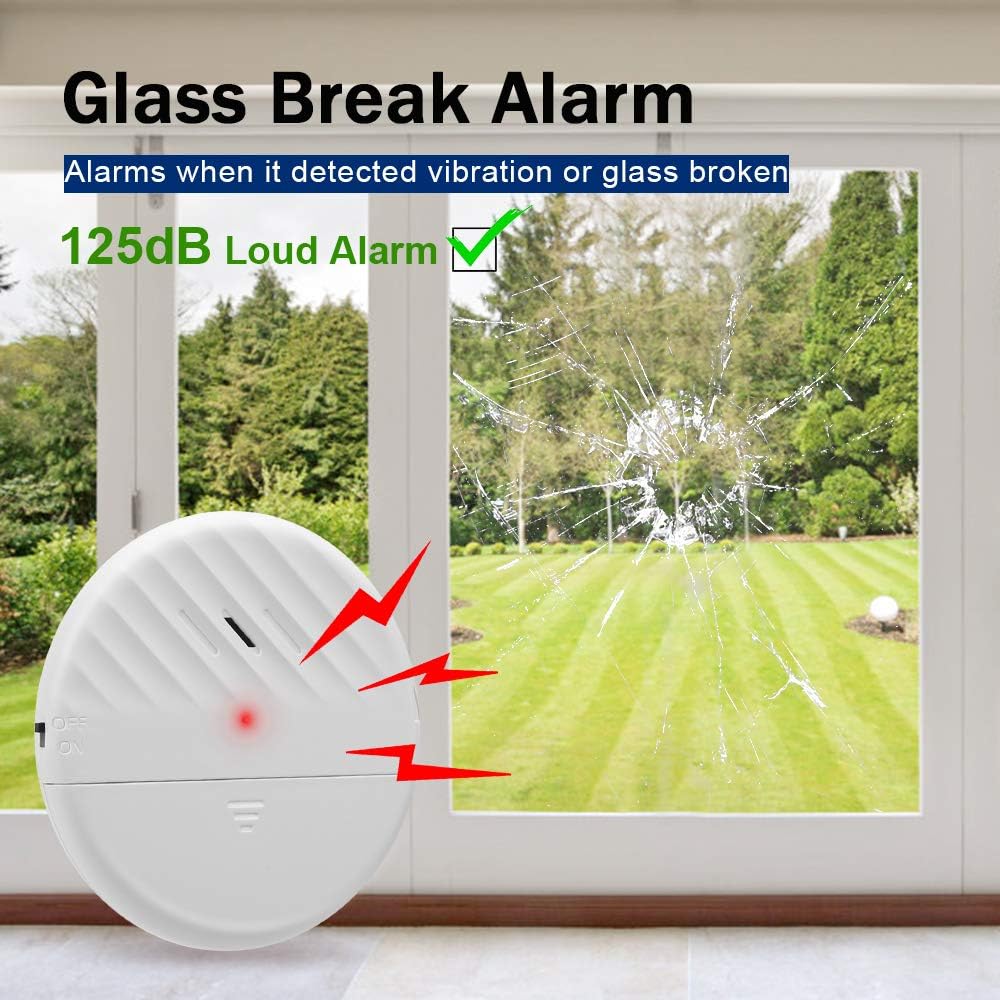
For renters or buyers building a first system on a tight budget, the priority is easy pairing, no drilling into glass, and reasonable coverage of the living room or ground-floor entry point. SimpliSafe’s native acoustic glass break sensor (third-generation as of this writing) pairs directly in the SimpliSafe app, requires no additional research into protocol compatibility, and is rated at 15 feet of coverage. It works exclusively within SimpliSafe’s ecosystem — which is a real constraint for anyone building toward a broader smart-home architecture, but genuinely sufficient for a renter’s use case. PCMag’s coverage of the best home security systems for 2026 identifies SimpliSafe as a leading recommendation for renters and first-time buyers specifically because of this ecosystem simplicity. For this tier, one sensor covering the main ground-floor room is the right starting point. Don’t overthink it.
WSDCAM
$27.99
In stock on Amazon
Check price on AmazonMid-Tier: Homeowner, Wireless Prosumer Panel, Multi-Room Coverage
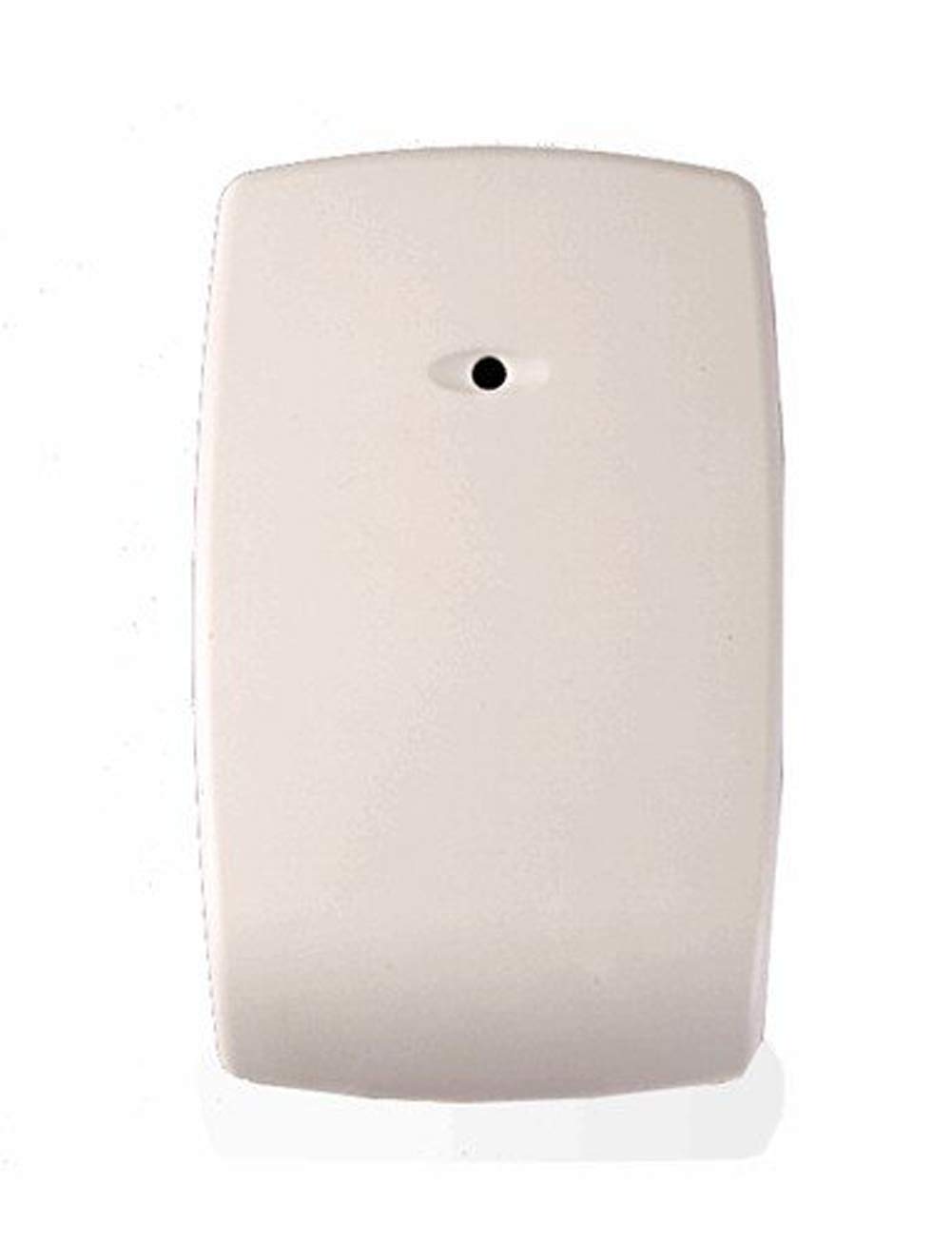
The step up to a prosumer wireless panel — most commonly the Qolsys IQ Panel 4 — opens access to the PowerG encrypted sensor ecosystem. The DSC PG9922 acoustic glass break sensor is the go-to choice here. It operates on DSC/Qolsys PowerG’s 433 MHz two-way encrypted protocol, which provides supervision (the panel knows if the sensor goes offline or is tampered with) at a level that basic 319 MHz sensors cannot match. Alarm Grid’s Glass Break Detectors FAQ and Compatibility Guide confirms the PG9922 as compatible with both the IQ Panel 4 and DSC PowerSeries Neo PG-enabled panels. Coverage is rated at 15–20 feet. For a homeowner protecting three or four rooms, two to three PG9922 sensors positioned at the center-wall of each floor is a realistic and well-supervised solution. SecurityInfoWatch’s coverage of acoustic glass break technology consistently identifies two-way supervision as the key differentiator between prosumer and budget wireless sensors.
Honeywell
$45.10
In stock on Amazon
Check price on AmazonPremium Tier: Hardwired Professional Install, UL-Listed, Multi-Zone Granularity
For professionally installed, UL-listed systems on hardwired panels — Honeywell/Resideo Vista-20P, DSC PowerSeries Neo (hardwired zones), or Bosch Solution 6000 — the spec calculus changes. The panel doesn’t care whether the sensor is acoustic or vibration; it sees an open/close contact at a zone input. What matters is zone definition, supervision, and power budget.
Zone definition: Hardwired panels allow you to define zone types. A glass break zone should typically be programmed as a 24-hour zone or perimeter zone depending on arming logic, per Alarm Grid’s Vista programming documentation.
Supervision via EOL resistors: Most professional-grade wired glass break sensors support end-of-line resistor supervision, allowing the panel to detect tamper, open-circuit, or short-circuit on the sensor loop. Per UL Standard 639 (Intrusion Detection Units), supervised zones are mandatory in many commercial and insurance-compliant residential installations. This requirement effectively mandates hardwired or PowerG-class wireless sensors for any install pursuing UL listing or insurance-discount documentation.
Power budget: Acoustic sensors draw more current than passive contacts — typically 8–15 mA in standby. A Vista-20P provides roughly 600 mA total auxiliary power distributed across all devices. Multiple acoustic glass break sensors alongside motion detectors and keypads require explicit power budget verification before finalizing the sensor count.
Named sensors confirmed compatible with these panels per Alarm Grid documentation and manufacturer specification sheets: Honeywell/Resideo FG-1625F (acoustic, hardwired, Vista and DSC compatible), Bosch DS151i (acoustic, hardwired, Bosch Solution 6000 native). For per-pane granularity on premium installs — particularly where laminated glass is involved — hardwired vibration/shock sensors wired to dedicated zones are the correct spec, with one zone per pane budgeted in panel capacity planning.
Honeywell
$94.81
In stock on Amazon
Check price on AmazonPanel Compatibility: Where Most Spec Errors Happen
“Compatible” means three things simultaneously: the sensor physically wires or pairs to the panel; the panel can enroll it as a recognized device type with the correct zone definition; and the panel software correctly interprets and reports the zone event. All three must be true.
Ring Alarm Pro represents the most important compatibility gap to flag. Ring does not currently offer a first-party glass break sensor. Third-party integrations via Ring Alarm Pro’s Z-Wave radio are theoretically possible for some sensor types, but acoustic glass break sensors are not Z-Wave native devices — they operate on independent audio processing hardware. The practical workaround most integrators use is pairing Ring Alarm Pro with a standalone acoustic glass break sensor that has its own siren or communicator, or routing a dry-contact relay output into a Ring Alarm hardwire kit. Both approaches add complexity and a second supervision loop. If glass break coverage is a non-negotiable requirement, Ring Alarm Pro is not the right platform selection.
Abode Hub and Abode Iota support Z-Wave and Abode’s proprietary RF sensors. Abode’s native glass break detector uses their proprietary RF. Z-Wave glass break detectors are not a widely available device class, so practical compatibility is limited to Abode’s own sensor lineup.
Installation Details Worth Getting Right
Laminated and tempered glass behave differently from annealed glass. Acoustic sensors are calibrated primarily to standard annealed glass. Laminated glass — common in sliding doors and many newer window installations — absorbs the shatter-stage sound signature because the glass cracks but doesn’t tinkle in the same way. Some acoustic sensors, including the Honeywell FG-1625F, include separate sensitivity modes for laminated glass, but effective coverage radius shrinks in this mode. Vibration sensors remain effective on laminated glass because they detect the mechanical shock event regardless of audio output.
Ceiling vs. wall mounting for acoustic sensors. Mounting on the ceiling at the center of a room maximizes multi-window coverage geometrically but places the microphone further from window-glass height, which can reduce sensitivity. Wall mounting near the corner opposite the windows keeps the microphone closer to glass height. Alarm Grid’s installation guidance for acoustic sensors favors wall mounting in most residential room configurations for this reason.
Tamper circuit verification during programming. When enrolling a wired glass break sensor, confirm the tamper circuit is enabled on the zone before conducting a walk test. It is a common oversight that leaves the zone supervised on the access panel view while tamper detection is effectively bypassed at the zone level.
Comparison Summary
| Sensor Type | Typical Coverage | Panel Compatibility | Per-Pane Granularity | Approx. Unit Cost (2026) |
|---|---|---|---|---|
| Acoustic hardwired (FG-1625F, DS151i) | 15–20 ft radius | Vista-20P, DSC Neo, Bosch 6000 | No — room level | $30–$60 |
| Acoustic PowerG wireless (PG9922) | 15–20 ft radius | Qolsys IQ4, DSC Neo PG | No — room level | $55–$90 |
| Vibration/shock hardwired | 1 pane per sensor | Any hardwired panel | Yes — per pane | $10–$25 per pane |
| Proprietary wireless (SimpliSafe) | 15 ft | SimpliSafe only | No — room level | $35–$50 |
Cost ranges reflect distribution and direct-to-consumer pricing as of May 2026; retail pricing at general consumer outlets typically runs higher.
The Decision Rule
- Open-plan room, multiple windows, hardwired panel: One or two acoustic sensors per floor, hardwired, 24-hour zone, EOL resistors. Honeywell FG-1625F or Bosch DS151i. Straightforward.
- Wireless prosumer install on Qolsys IQ Panel 4: DSC PG9922 PowerG acoustic. The two-way supervision is worth the cost premium over legacy 319 MHz sensors.
- High-value single panes, per-zone granularity, or laminated glass: Vibration/shock sensors on each pane, wired to dedicated zones on a hardwired panel. Budget one zone per pane.
- SimpliSafe ecosystem, renter context: SimpliSafe’s native glass break sensor is the only viable path and covers the use case adequately.
- Ring Alarm Pro: Recognize the gap. Either accept it or reconsider the platform if glass break coverage is non-negotiable.
Glass break sensors are rarely the most discussed line item in a spec, but they close the window-entry vector that contact sensors alone leave open. Getting the technology type and panel compatibility right the first time is the difference between a system that earns UL listing and insurance credit — and one that generates nuisance alarms or leaves silent gaps in coverage. Spec deliberately.